In Nashville, almost nobody writes alone. The biggest hits in country, pop, and even rock are written by two, three, or four writers in a room together, and this isn't a recent trend, it's been the standard for decades. There's a reason: co-writing consistently produces better songs faster. It forces you to articulate ideas you'd normally leave vague, it fills your blind spots with someone else's strengths, and it creates accountability that keeps you from abandoning songs halfway through.
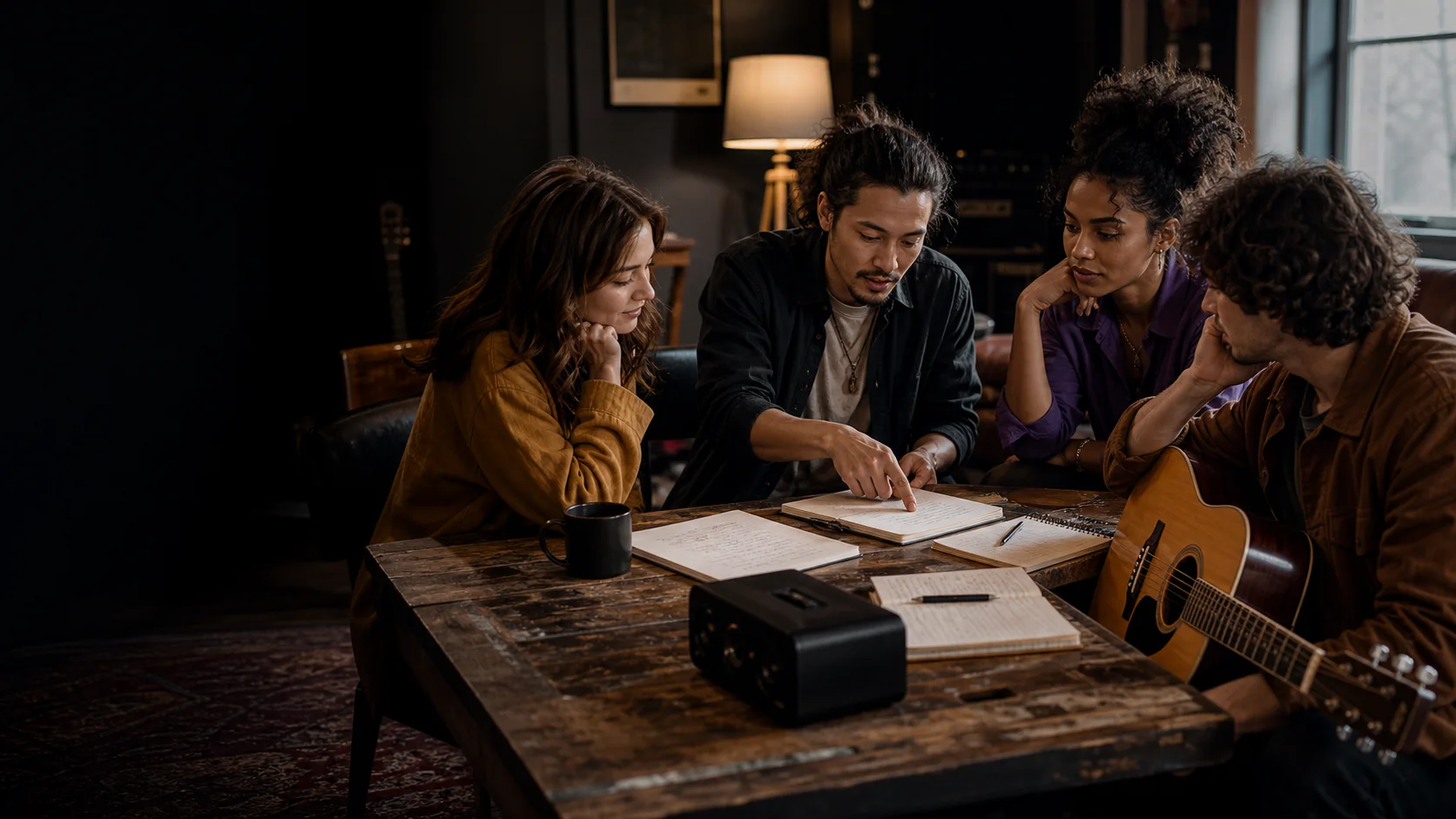
The typical Nashville co-write follows a specific format. Two or three writers meet, usually at a publisher's office, a writing room, or someone's home studio, for a three-hour session. The first thirty to sixty minutes are spent talking: catching up, sharing ideas, pitching titles, discussing concepts. This is not wasted time. It's the most important phase. You're finding the emotional territory and testing ideas against each other. A title that sounded great in your head might get a lukewarm response in the room, and that saves you from spending two hours on a song that never had legs.
Roles often emerge naturally in a co-write. One person might be the stronger lyricist, they're good with imagery, rhyme, and story structure. Another might be the melodist, they hear shapes and hooks and can sing ideas into existence quickly. A third might be the producer-minded writer who thinks in terms of groove, tempo, and sonic identity. The best co-writes happen when each person leans into their strength while staying open to contributing in other areas. Nobody owns any one domain. The lyricist might sing the hook melody. The melodist might suggest the key image in the bridge.
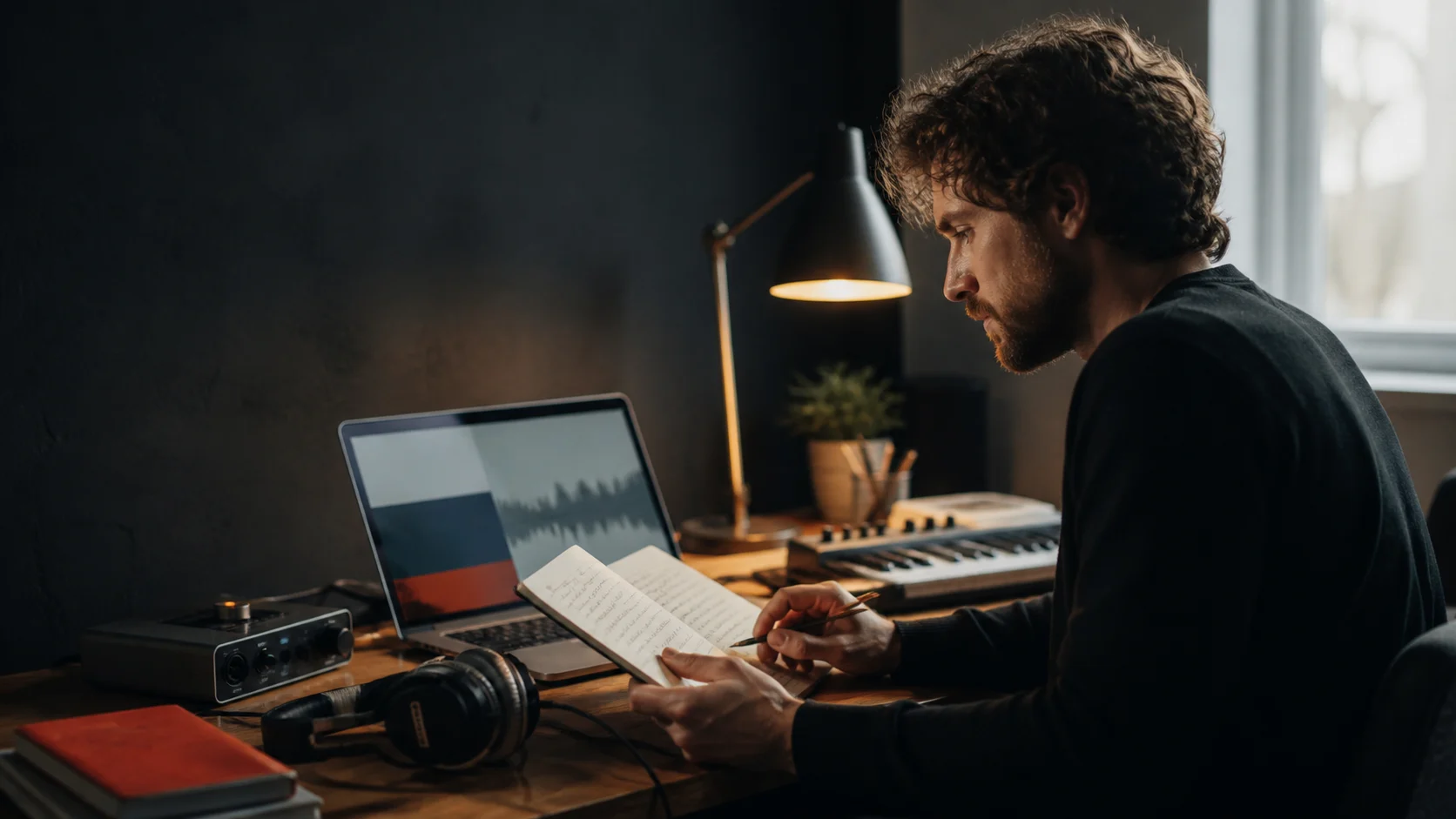
Preparation matters enormously. Show up to a co-write with material. Bring five to ten title ideas written down. Bring a voice memo of a melodic fragment you've been humming. Bring a verse or a concept you haven't been able to crack on your own. The worst co-writes happen when everyone shows up empty-handed and spends the first hour staring at each other. Professional writers treat co-writing like a job, they prepare, they show up on time, and they come ready to generate.
The three-hour format works because it creates productive pressure. You don't have all day. You need to pick an idea in the first hour, write the song in the next two, and walk out with at least a solid demo or work tape. This time constraint prevents overthinking and perfectionism. It forces quick decisions: "That line is good enough for now, let's keep moving." Some of the best lines in hit songs were written in five seconds during a co-write because the clock was ticking and someone just said the first thing that came to mind.
Handling creative differences is an essential co-writing skill. You will disagree. You will love a line that your co-writer wants to cut. They will push for a chord change you think is wrong. The key is to always serve the song, not your ego. If you can't tell whether your line or their line is better, try both. Sing the verse both ways and see which one feels right in context. The song is the boss, not you, not them. Writers who can't let go of their ideas don't get invited back.
There's an unspoken rule in Nashville co-writing
you don't play politics with lines. If someone suggests a line and you want to change it, you change it openly in the room. You don't secretly rewrite their contribution later. Everything that happens in the room is collaborative property. Credits are split equally regardless of who contributed what, typically an even split among all writers present. This keeps things clean and keeps the focus on the work, not on protecting territory.
Finding co-writers when you're starting out can feel daunting, but there are clear pathways. Songwriter nights and open mics are natural meeting grounds. Online communities and forums connect writers across geography. Local songwriting groups and workshops often pair writers for exercises. The key is to write with people at roughly your level or slightly above. Writing with someone far more experienced can be educational but intimidating. Writing with someone at your level creates a partnership where both people push each other to grow.
Virtual co-writing has exploded in recent years and it works better than most people expect. A video call, a shared document for lyrics, and the ability to screen-share a DAW or play guitar on camera is all you need. The key difference is that virtual co-writes require more explicit communication. In person, you can read body language, you can see someone's face light up or go flat when you pitch an idea. On a video call, you need to verbalize reactions: "I love that" or "I'm not sure about that, can we try a different angle?"
Co-writing also makes you a better solo writer. The habits you develop, articulating why a line works, defending choices with reasoning instead of instinct, being open to alternatives, transfer directly to your solo writing process. You develop an internal co-writer, a second voice in your head that questions your first instinct and pushes you to try one more option before settling. Many Nashville writers say the biggest growth in their craft came not from classes or books but from the hundreds of co-writes where they watched other writers solve problems differently than they would have.
If you've never co-written before, start with a low-pressure session. Reach out to another writer, agree on a time, bring some titles, and commit to finishing something in the session, even if it's rough. The first one might feel awkward. The second one will feel easier. By the fifth, you'll understand why Nashville builds its entire industry on this model: because two brains writing toward the same emotional target almost always produce something neither brain could have found alone.