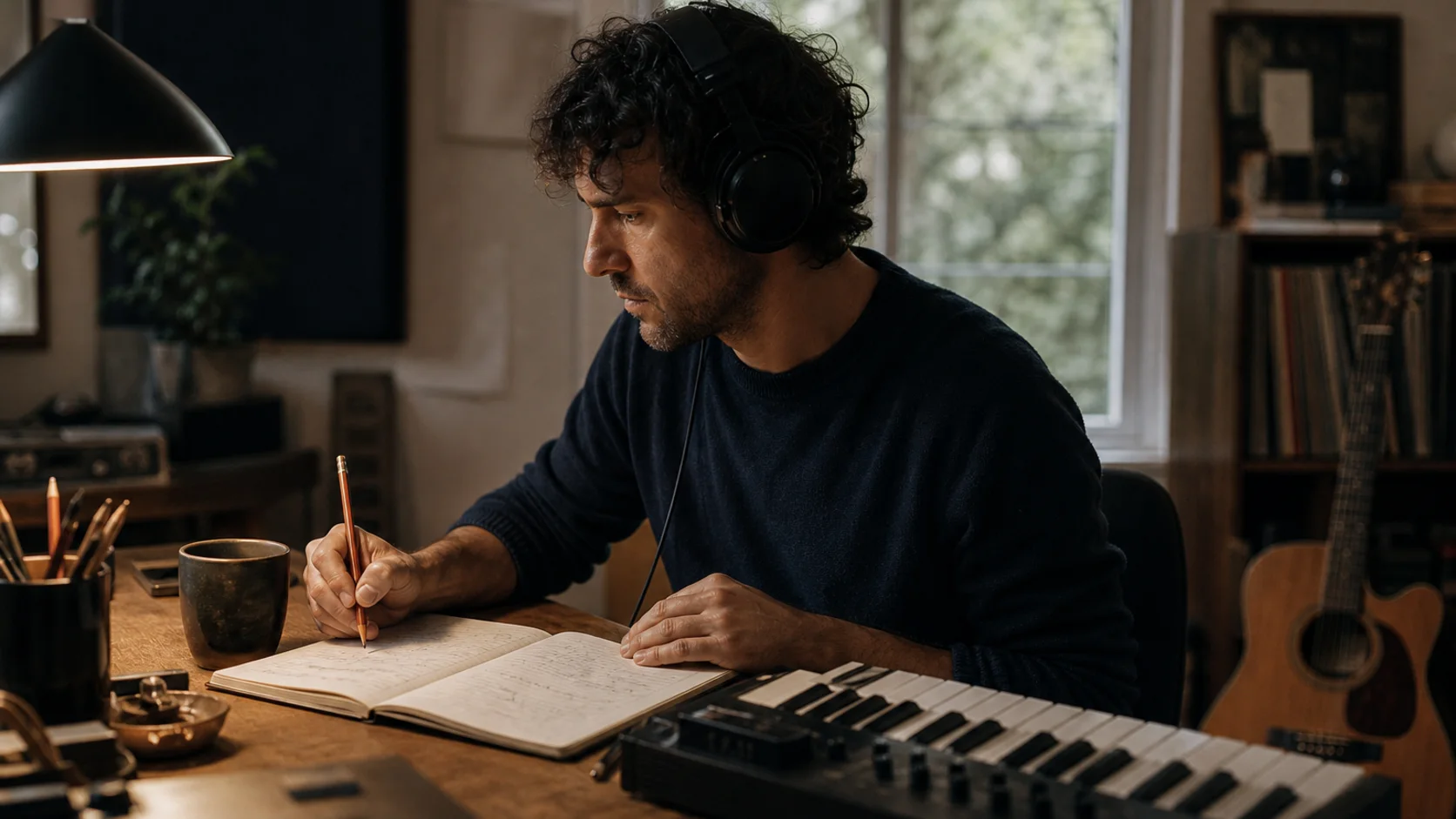
Country music is a lyric-first genre. While pop can survive on production and melody alone, country lives and dies on the strength of its words. Nashville has one of the most rigorous songwriting cultures in the world, staff writers clock in five days a week, co-write in two-hour sessions, and pitch songs to A&R reps who can spot a weak line at fifty paces. The standards are high because the audience cares about lyrics. Country listeners pay attention to words in a way that pop listeners often don't.
The first convention that defines country songwriting is conversational language. Country lyrics sound like someone talking to you across a kitchen table. They use contractions, colloquialisms, and the natural rhythms of spoken English. "I'm gonna love you till the wheels fall off" is country. "I shall endeavor to love you eternally" is not. This conversational quality creates immediacy and authenticity, two values the country audience prizes above all else. Even when the sentiment is poetic, the delivery should feel natural.
Story songs are the backbone of the country tradition. While pop choruses can float free of narrative context, country songs typically tell stories with beginnings, middles, and ends. Characters have names. Places are specific. Events unfold in sequence. Songs like "The Gambler," "Coat of Many Colors," "He Stopped Loving Her Today," and "The Dance" are complete narratives compressed into three minutes. The story song tradition means country writers need to master plot, character, and pacing in addition to rhyme, melody, and structure.
The hook tradition in country is second to none. Country hooks are short, memorable, punchy, and often built on wordplay, idioms turned on their heads, or familiar phrases used in unexpected contexts. "She's in Love with the Boy," "Friends in Low Places," "Before He Cheats," "Need You Now." The best country hooks sound like something you've heard before but haven't, they tap into the language's existing rhythms and phrases, then twist them just enough to feel fresh. Many Nashville writers start with the hook and build the song backward from it.
Specificity in country goes beyond the generic stereotypes that outsiders associate with the genre. Yes, there are trucks and dirt roads and cold beer. But the best country writing is specific in ways that transcend those tropes. Dolly Parton doesn't just write about being poor, she writes about the coat her mother sewed from rags, each piece representing a specific person's love. Johnny Cash doesn't just write about prison, he writes about watching a train go by from a cell in Folsom, imagining the free people on board. The specificity isn't about trucks. It's about details so precise that the listener can see, smell, and feel the world of the song.
Twist endings are a beloved country convention, particularly in story songs. The entire song sets up an expectation, and the final line subverts it. "The House That Built Me" twists from nostalgia into a plea for healing. "Live Like You Were Dying" twists from a terminal diagnosis into a celebration of fully lived life. The twist works because the setup is so thorough, the listener is leaning in one direction, and the final line redirects everything they've heard. Writing a good twist requires planning the whole song backward from the reveal.
Co-writing is not just common in Nashville, it's the norm. The vast majority of country hits are written by two or three writers working together. Nashville co-writing sessions typically last two to three hours and follow an informal structure: writers share ideas, settle on a concept and hook, then divide the labor of lyric and melody development. The co-writing culture means country writers need to be collaborative, ego-free, and able to generate ideas quickly. It also means they hear thousands of ideas from other professionals, which keeps their craft sharp.
Modern country has expanded the genre's sonic palette while maintaining its lyric-first values. Writers like Chris Stapleton, Kacey Musgraves, and Brandi Carlile blend traditional country storytelling with rock, pop, and Americana influences. The production may include electronic elements, but the lyrics still follow country principles: conversational language, specific imagery, strong hooks, and emotional authenticity. Understanding these enduring principles is more important than chasing whatever production trend is dominating country radio this month.
The verse-chorus dynamic in country is particularly important because of the story song tradition. Country verses do heavy narrative lifting, they introduce characters, set scenes, and advance the plot. Country choruses distill the story's emotional theme into a repeatable statement. The best country songs have choruses that mean one thing after verse one and something deeper after verse two. "The Dance" by Garth Brooks is a masterclass in this technique, the same chorus lyric shifts from being about a relationship to being about life itself.
If you want to write in the country genre, here is the most important exercise you can do: listen to fifty classic country songs and write down the hook of each one. Study how the hook relates to the story, how the verses set it up, and how the twist (if there is one) recontextualizes it. Then try writing five hooks of your own, short, conversational, built on familiar phrases or idioms. Pick the strongest one and build a song backward from it, the way Nashville writers do. This hook-first approach will teach you more about country craft than any textbook.